Each case sets out the situation, GFN's role, the work completed, and the outcome. The first four are the principal evidence for the two operating domains.
Swiss Camp, the Air France Flight 66 recovery, a Rannís-funded software product, and the Frostbyte / NCC-IS lab lead the record, followed by additional software, research, and expedition work.
GFN supported expedition preparation, glacier and field leadership, technical equipment, communications, documentation, and helicopter-supported removal work during the 2026 Swiss Camp decommissioning operation.
Field systemsSwiss CampGreenlandGlacier travelHelicopter logisticsField documentation
Challenge
The operation had to dismantle and remove infrastructure from a remote research station in a crevassed ice-sheet environment. The work depended on limited aviation windows, sling-load movements, technical equipment, reliable communications, and a small field team working around weather and glacier hazards.
Role
GFN participated in the operation in a glacier and field leadership capacity. The work included preparation before deployment, glacier travel and self-rescue systems, technical equipment, communications, field documentation, operational support on the ice, and support around helicopter movements and demobilization.
Approach
Before departure, GFN selected, inspected, recorded, and packed the equipment assigned to its part of the operation. In Greenland, the work covered approximately 12 days associated with preparation, deployment, work on the ice, and closeout. Equipment and field systems were adjusted around the team, weather, glacier conditions, and aviation plan.
Outcome
The operation completed its primary field objective and removed approximately 80% of the material remaining at Swiss Camp. Thousands of kilograms were moved from the ice by helicopter sling load. These figures describe the result of the wider operation, not work owned by GFN alone.
Swiss Camp Decommissioning
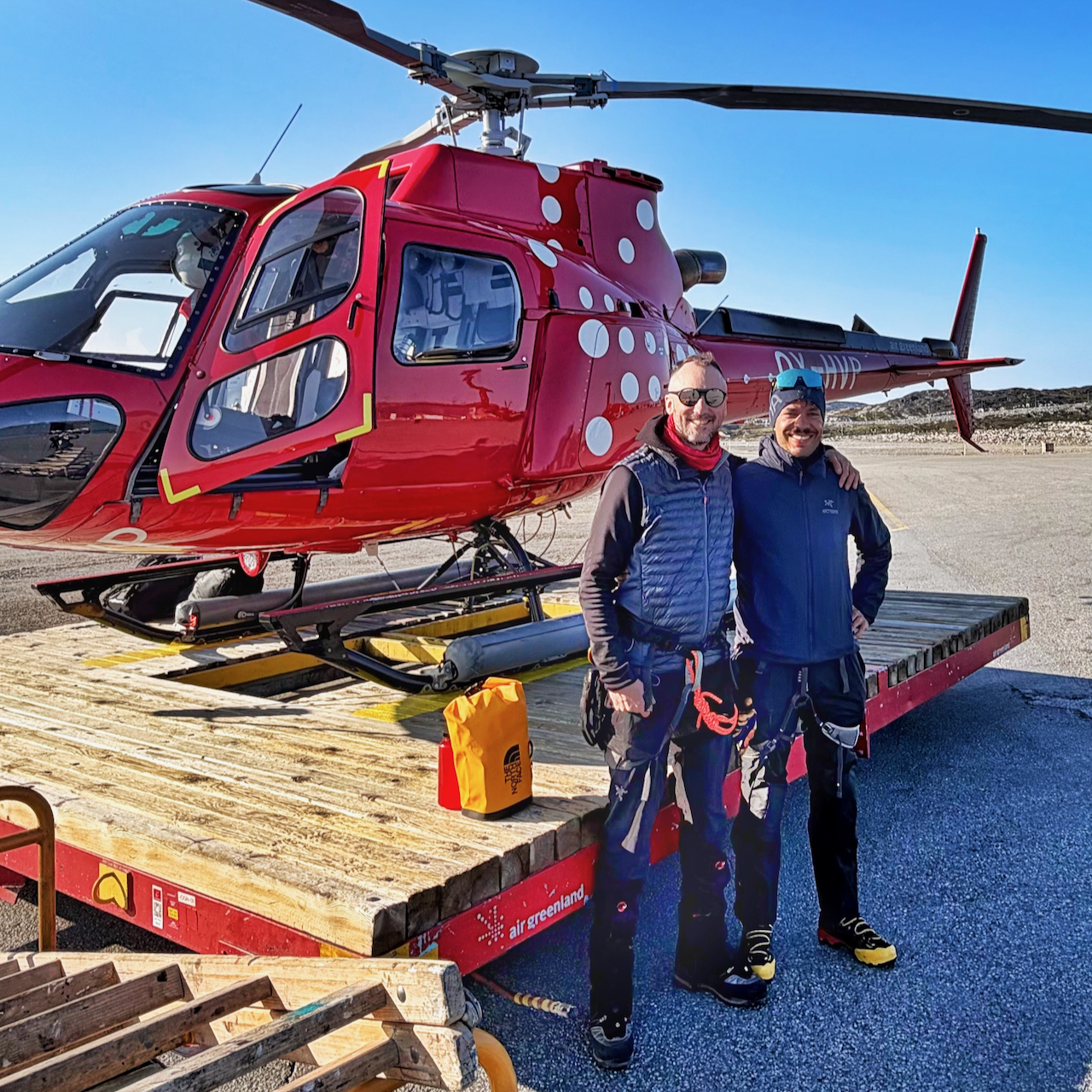
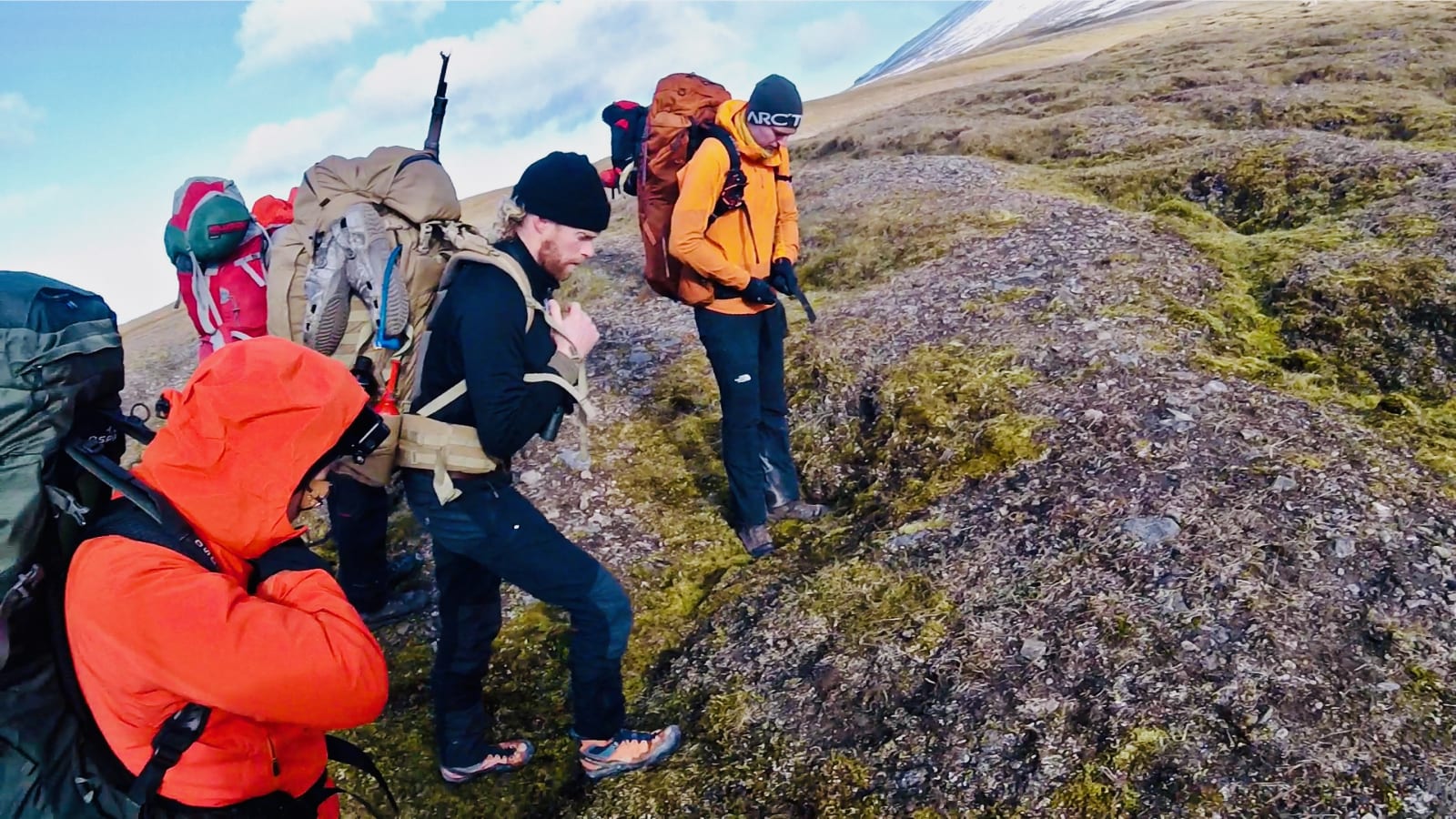
Field team and helicopter support during the 2026 Swiss Camp operation in Greenland.
Selected Work 02
Rannís-Funded Startup Architecture & Delivery
Selected Gale Force North client engagement with a Rannís-funded Icelandic startup, bringing a service-marketplace concept into a structured product, architecture, cloud platform, design handoff, and delivery path.
The project is a two-sided marketplace for Icelandic licensed trade work, where product design, trust, scope definition, offers, agreements, documents, payments, and property maintenance records all have to operate as one coherent software system. Clear architecture and delivery structure keep the product flows, decisions, payments, trust signals, and infrastructure aligned.
Role
Gale Force North provides technical leadership and project management across product architecture, implementation direction, cloud infrastructure, delivery planning, UI/UX hiring, design handoff, and coordination with external contributors. The work has carried the technical foundation into structured delivery artifacts and cloud-platform implementation.
Approach
The work connects product intent to implementation. A system architecture and infrastructure plan defines the frontend, backend API, database, identity, environments, deployment, monitoring, backup, and security model. A marketplace design brief translates the product into roles, journeys, requirements, trust signals, payment states, evidence records, and development-ready design-system expectations. The cloud work has established a governed AWS foundation with development, staging, production, and shared networking accounts, Terraform/Terragrunt workflows, DNS and certificate controls, operator-access boundaries, and repeatable delivery practices. Design coordination includes hiring for UI/UX capability and preparing external design work for review and implementation against explicit requirements.
Outcome
The project now has a defined product scope, architecture, implementation-ready UI flows, design-system expectations, cloud infrastructure plan, multi-environment AWS footing, DNS and certificate control model, and delivery path that future contributors can inspect.
Selected Work 03
Greenland Ice Sheet Aviation Recovery & Under Ice
Field participation in the Air France Flight 66 fan-hub recovery on the Greenland Ice Sheet, followed by the four-month creation of Under Ice, an IMDb-listed documentary artifact about the mission.
Aviation recoveryGreenland Ice SheetSearch-and-rescue backgroundArctic field operationsTechnical extractionDocumentary production
Challenge
Recovering an aircraft engine component from the Greenland Ice Sheet is not a normal field task. The missing fan hub fragment had separated from an Air France A380 during flight and was needed for further aviation safety investigation. After nearly two years of scientific search and localization work by specialist teams, the recovery party was flown to the confirmed site in a remote crevasse-field environment where the component was buried under snow and ice.
Role
Joined the privately organized recovery expedition as an Icelandic field specialist, bringing glacier travel, rope, and rescue experience to the extraction work. The expedition was not an Icelandic SAR operation. After the mission, Arnar Ingi created Under Ice, a 30-minute documentary about the final recovery expedition, over a four-month production period. The film is listed on IMDb and serves as a public documentary artifact for the project.
Approach
The recovery was treated as a controlled field operation. Crevasses, snow bridges, weather, polar-bear risk, camp safety, heavy-object handling, and helicopter-supported logistics all had to be handled as operational constraints. The work involved crevasse-area safety, fall-arrest systems, digging and melting through snow and ice, multi-directional rope hauling, sled movement, winch support, and preparing the more than 200 kg fragment for helicopter sling transport. The documentary work then turned the field material into a coherent account of the mission context, camp work, extraction process, crevasse risk, rope systems, and helicopter sling preparation.
Outcome
The fan hub fragment was recovered from the Greenland Ice Sheet and delivered for further inspection as part of the aviation safety investigation. Under Ice preserved the final recovery work as a public documentary record, extending the value of the field operation beyond the extraction itself.
Under Ice Trailer
One-minute trailer for Under Ice, Arnar Ingi's documentary about the Greenland ice-sheet recovery of the Air France Flight 66 fan-hub fragment.
Loading video...
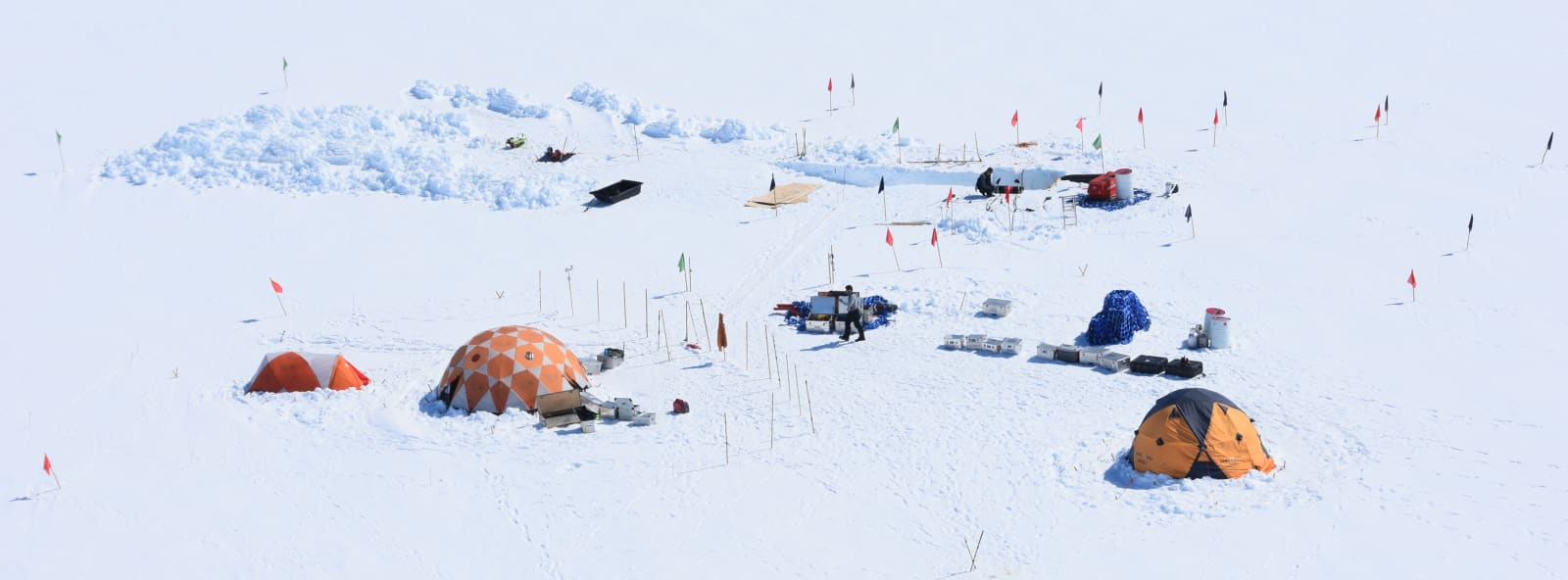
Greenland Ice-Sheet Recovery Site
Field camp and marked work area on the Greenland ice sheet during the fan-hub recovery mission.
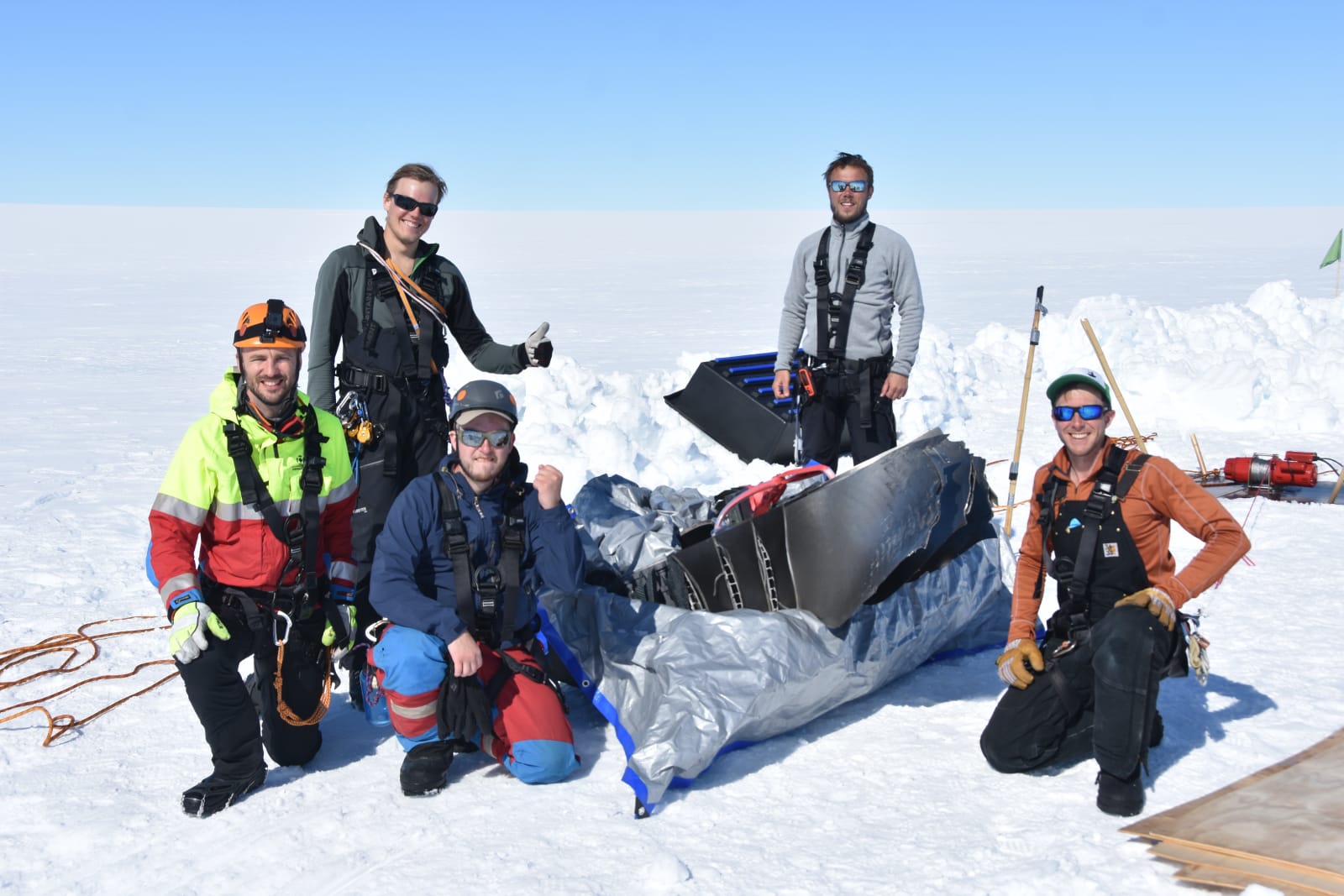
Flight 66 Fan-Hub Recovery
The recovered fan-hub fragment with the field team and lifting equipment on the Greenland Ice Sheet.
Ice Pit Haul System
The rope and pulley system used to control the fragment during extraction from the snow-cut pit.
Loading video...
Under Ice Documentary
The full 30-minute documentary created over a four-month production period, following the final recovery operation on the Greenland ice sheet.
Selected Work 04
Frostbyte / NCC-IS Lab Buildout
Year-long work driving the Frostbyte / NCC-IS lab buildout from concept and limited infrastructure into a working technical environment with servers, networking, virtualization, storage, student teams, and operational structure.
Launching Reykjavík University's part of the Frostbyte / NCC-IS lab required more than a nominal lab concept. The project needed physical infrastructure, server-room installation, virtualization, networking, Linux environments, internal services, backup strategy, student coordination, web presence, and a working space where technical development could happen.
Role
Drove the project forward across technical leadership, procurement, physical setup, student hiring, student supervision, infrastructure planning, and operational execution through a year-long launch and early-operations period.
Approach
The work followed a startup-style execution model: secure and equip a working space, assemble a motivated student team, define the technical direction, and build usable infrastructure quickly. Physical servers were procured and installed, networking was planned around MikroTik equipment, Proxmox provided the virtualization layer, Linux virtual machines supported lab services and exercises, and internal tooling included GitLab plus a MinIO-based backup strategy.
Outcome
The project moved from limited initial footing to a functioning Frostbyte / NCC-IS lab environment with physical servers, virtualization, networking, Linux systems, internal development tooling, backup strategy, web presence, student participation, and operational direction. It helped create the foundation for a lab that later gained dedicated workspace and long-term research and education value.
Selected Work 05
Subsea Fibre Seismic Research
Ongoing MSc thesis research using high-performance computing to compare earthquake simulations with observed signals on the Iceland-Ireland subsea cable, presented as a research poster at EGU 2025.
EGU 2025 posterNokia Bell Labs collaborationResearch infrastructureHPCEarthquake simulationsSubsea cable dataPython
Challenge
The research sits between geophysics, signal processing, scientific computing, and infrastructure. It uses data from the Iceland-Ireland subsea cable and compares observed cable signals with synthetic earthquake waveforms, which requires careful data handling, simulation workflow design, high-performance computing, and enough structure for research collaborators to inspect and extend the work.
Role
Carrying out ongoing MSc thesis research after completing the coursework component of the degree, with collaboration involving Nokia Bell Labs and academic partners. Presented the work as a research poster at EGU 2025, the European Geosciences Union General Assembly, Europe's largest and most prominent geosciences event.
Approach
The work uses high-performance computing platforms to run earthquake simulations and compare synthetic waveforms with observed subsea-cable signals. The implementation focus is reproducible research workflow: organized data processing, repeatable simulation runs, structured comparison of observed and synthetic signals, and code that remains understandable as the research question evolves.
Outcome
The project has produced a visible research artifact through the EGU 2025 poster and continues as ongoing thesis work. For Gale Force North, it is evidence of applied technical work across scientific data, HPC, signal processing, research infrastructure, and external collaboration.
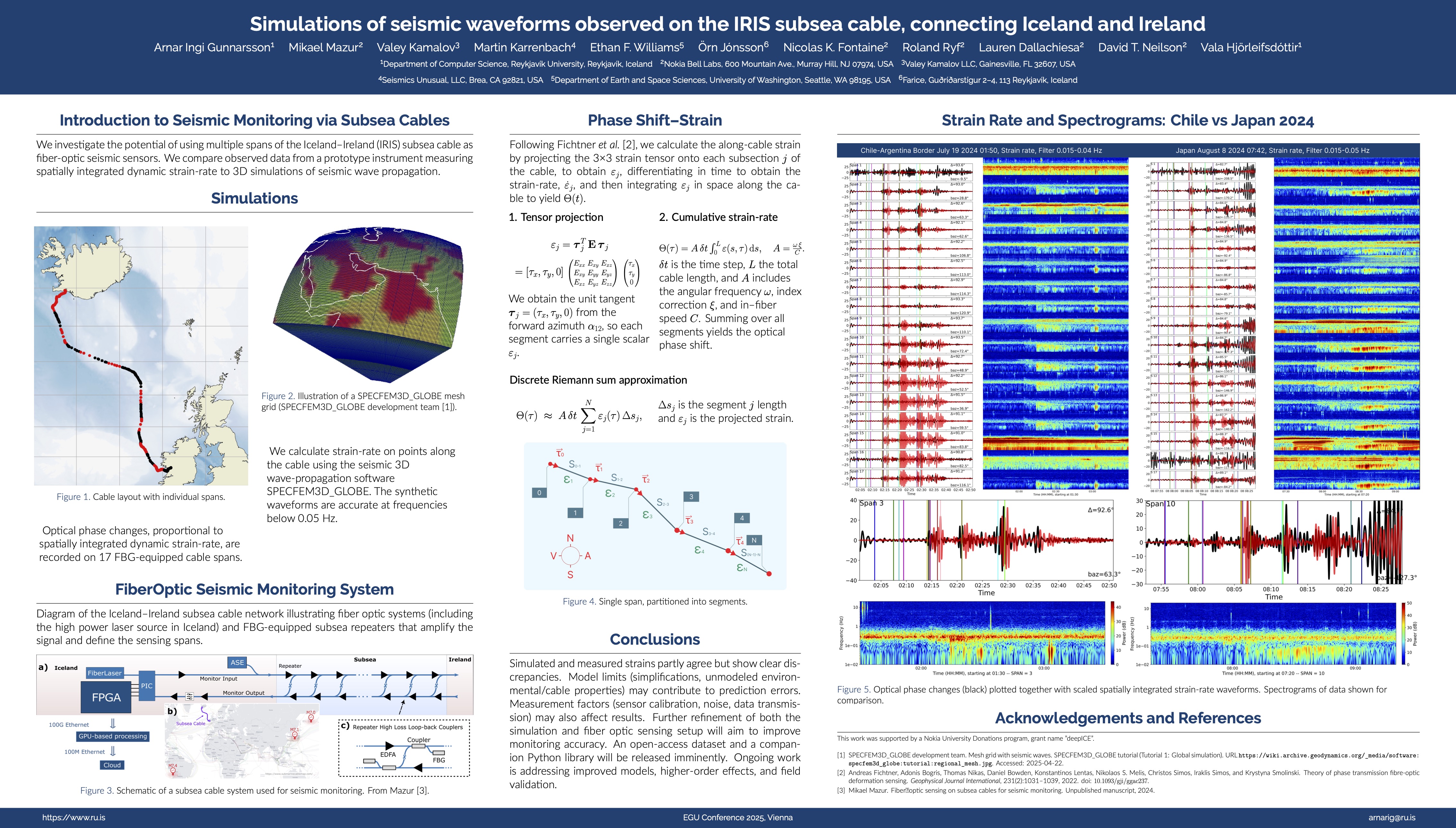
EGU 2025 Research Poster
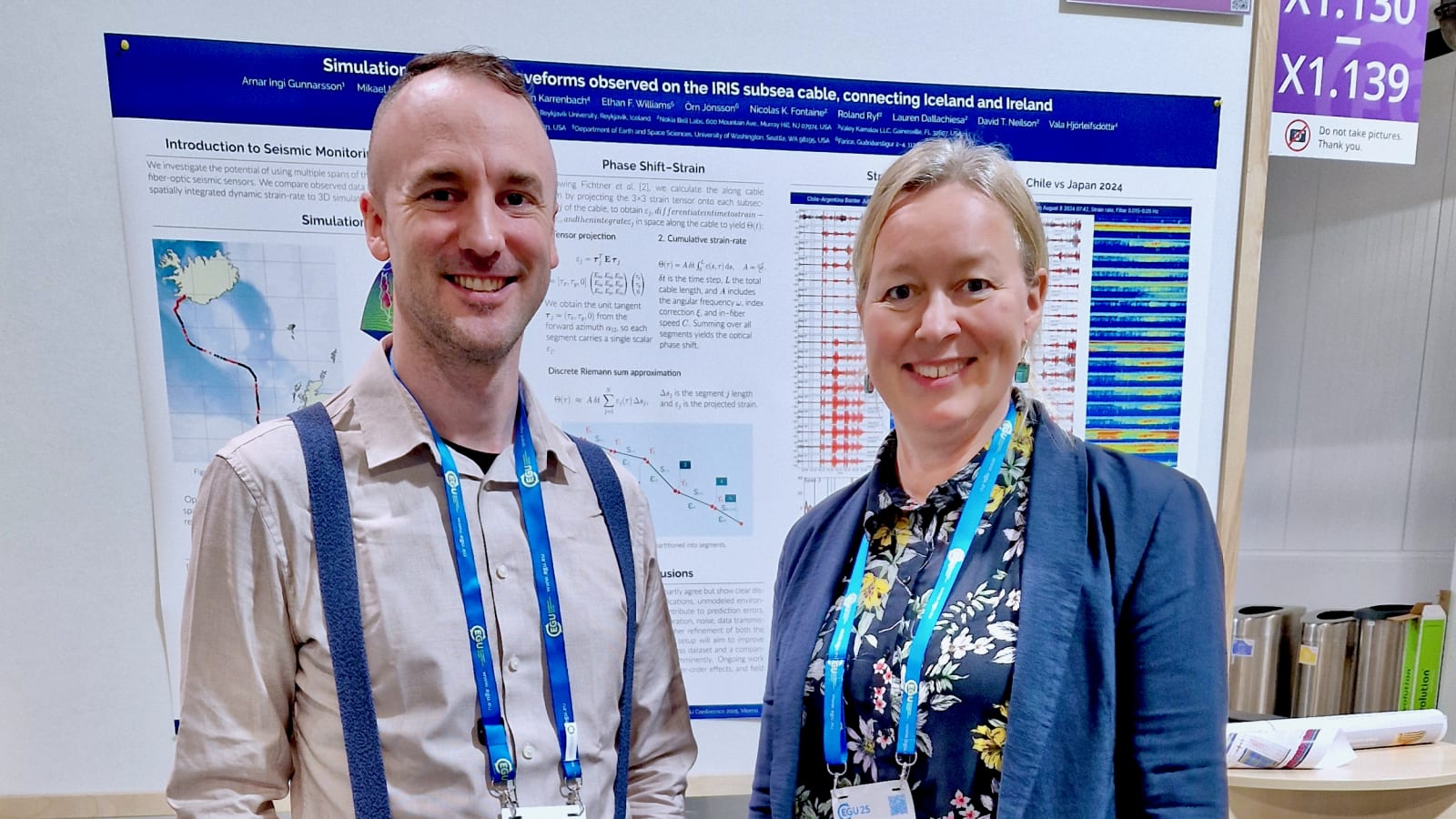
Research poster presented at EGU 2025, the European Geosciences Union General Assembly, for ongoing MSc thesis work on seismic waveforms observed on the Iceland-Ireland subsea cable.
EGU 2025 Poster Presentation
Arnar Ingi with the subsea-cable seismic research poster at EGU 2025.
Selected Work 06
Memory Forensics And OS Identification
Applied MSc cybersecurity research using deep learning to identify operating systems from memory dumps, with kernel extraction, binary disassembly, Slurm-based HPC processing, and GPU-accelerated training.
Operating-system identification from memory snapshots is useful for VM management, security monitoring, and forensic analysis, but raw memory dumps are large, noisy, and difficult to compare directly. The project needed a scalable pipeline that could turn kernel-level binary material into structured features suitable for machine-learning classification.
Role
Designed and implemented the research pipeline for an MSc cybersecurity project, covering data preparation, kernel extraction, binary disassembly, feature-vector generation, HPC processing, and GPU-accelerated model training.
Approach
The workflow started from a 1.5 TB memory-dump dataset and reduced it to a 39 GB kernel dataset before transfer to the HPC platform. Feature extraction used the iced_x86 library for kernel disassembly, histogram-based function-size features, and Slurm array processing across 100 CPU tasks, reducing a roughly eight-hour serial job to about twenty minutes. A GPU-trained feedforward neural network then classified the retained operating-system classes from the processed vectors.
Outcome
The project produced a working applied-research pipeline across cybersecurity, binary analysis, data processing, HPC orchestration, and deep-learning model training, reaching 99.42% accuracy across the retained classes while still showing limits around rare classes. For Gale Force North, it is evidence of practical work at the boundary between software, infrastructure, research data, and security analysis.
Selected Work 07
Svalbard SAR Expedition Planning & Execution
Planning and executing a 60 km Arctic expedition for 18 members of an Icelandic search-and-rescue team, coordinating route design, polar-bear risk, weather, people, equipment, authorities, accommodation, transport, and marine extraction.
Moving 18 people safely through 60 km of Svalbard terrain required more than choosing a route. The expedition involved Arctic weather, rough terrain, polar-bear risk, communications constraints, group fatigue, accommodation, transport, equipment, authority coordination, and the practical reality of keeping a large volunteer team aligned over months of preparation.
Role
Planned and executed the expedition for members of an Icelandic search-and-rescue team. Led route planning, participant coordination, deadline management, travel logistics, accommodation coordination, safety-equipment planning, authority coordination, and extraction planning.
Approach
The expedition was planned as a controlled field operation. The route was designed around distance, terrain, weather exposure, group capability, camp logistics, and extraction feasibility. Safety planning included tent-group organization, night-watch structure, trained rifle capability in each tent group, flare guns, satellite phones, and coordination with Svalbard authorities and local operators. Marine extraction from Barentsburg was arranged with RIB boats and support boat capacity from Longyearbyen.
Outcome
The expedition was planned, coordinated, and executed as a successful 60 km Arctic field operation for 18 participants, with a defined route, safety structure, communications plan, polar-bear risk controls, camp organization, and planned marine extraction.
Svalbard Expedition Video
Field video from the three-day, 60 km search-and-rescue training expedition.
Loading video...
Svalbard Valley Route
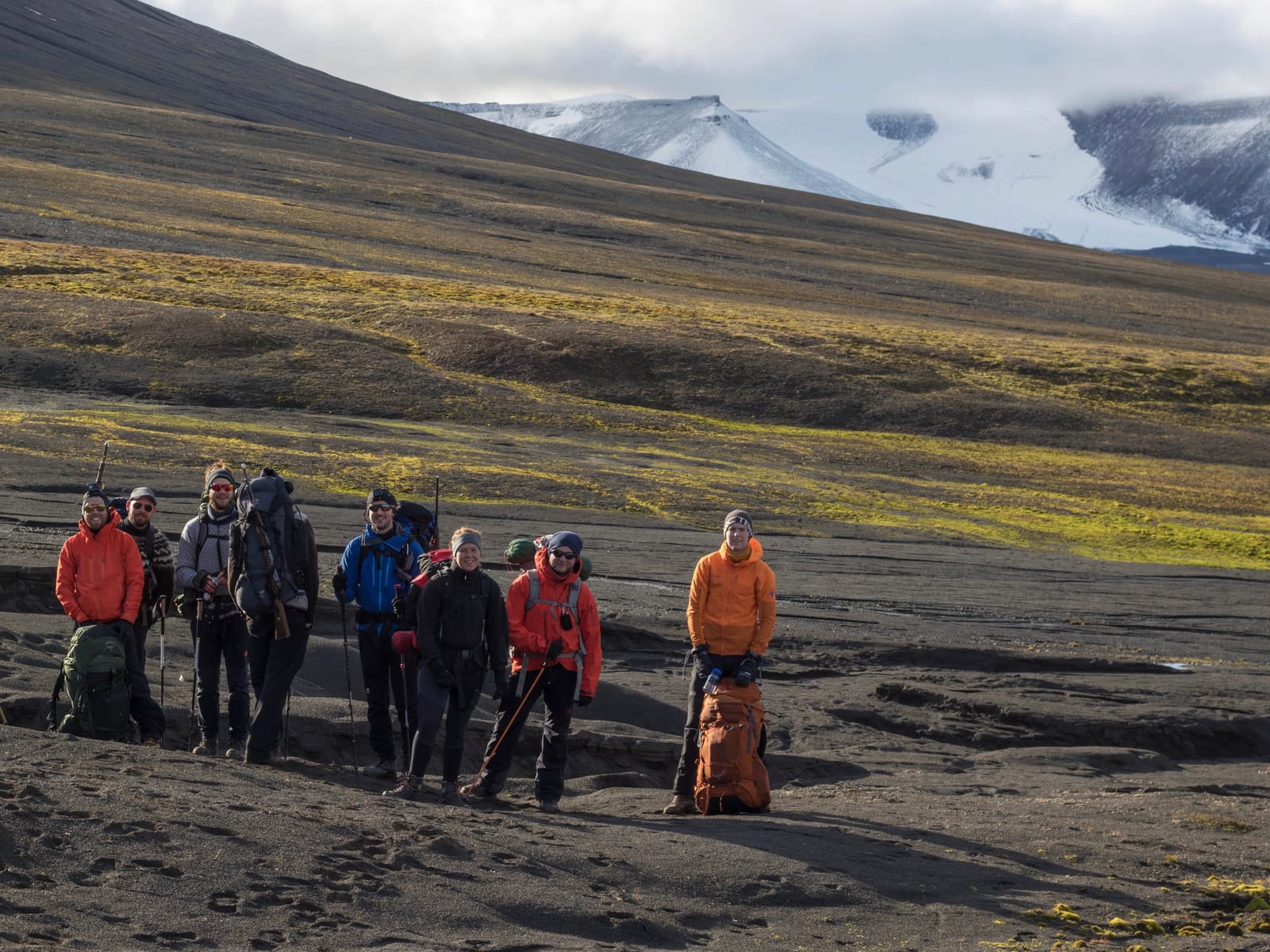
The expedition team moving through open Svalbard terrain with full packs.
Longyearbyen Night Walk
The expedition group at the polar-bear warning sign outside Longyearbyen before departure.
Svalbard Boat Transfer
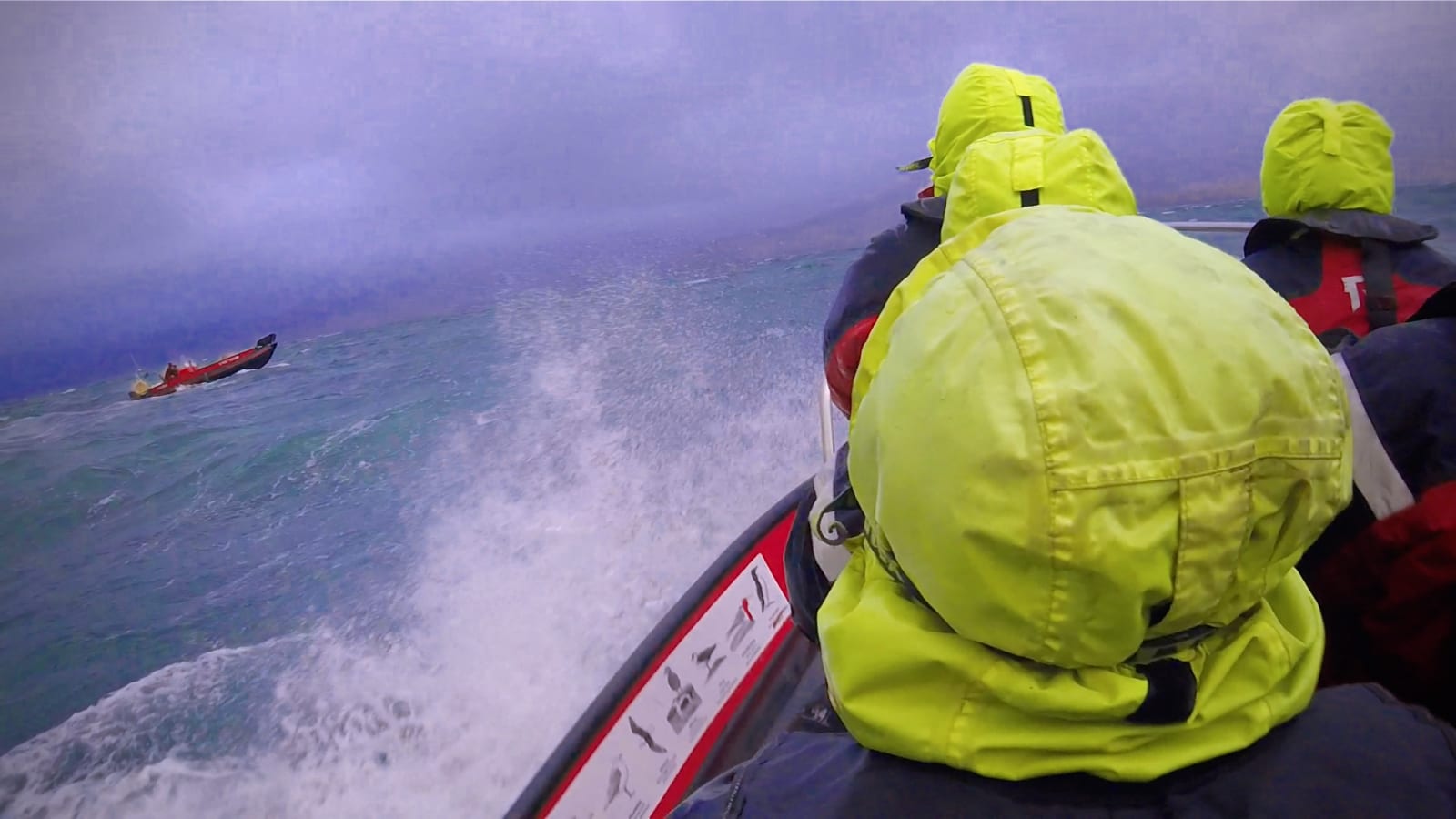
Local boat support during the coastal transfer and extraction plan.
Svalbard Route Outlook
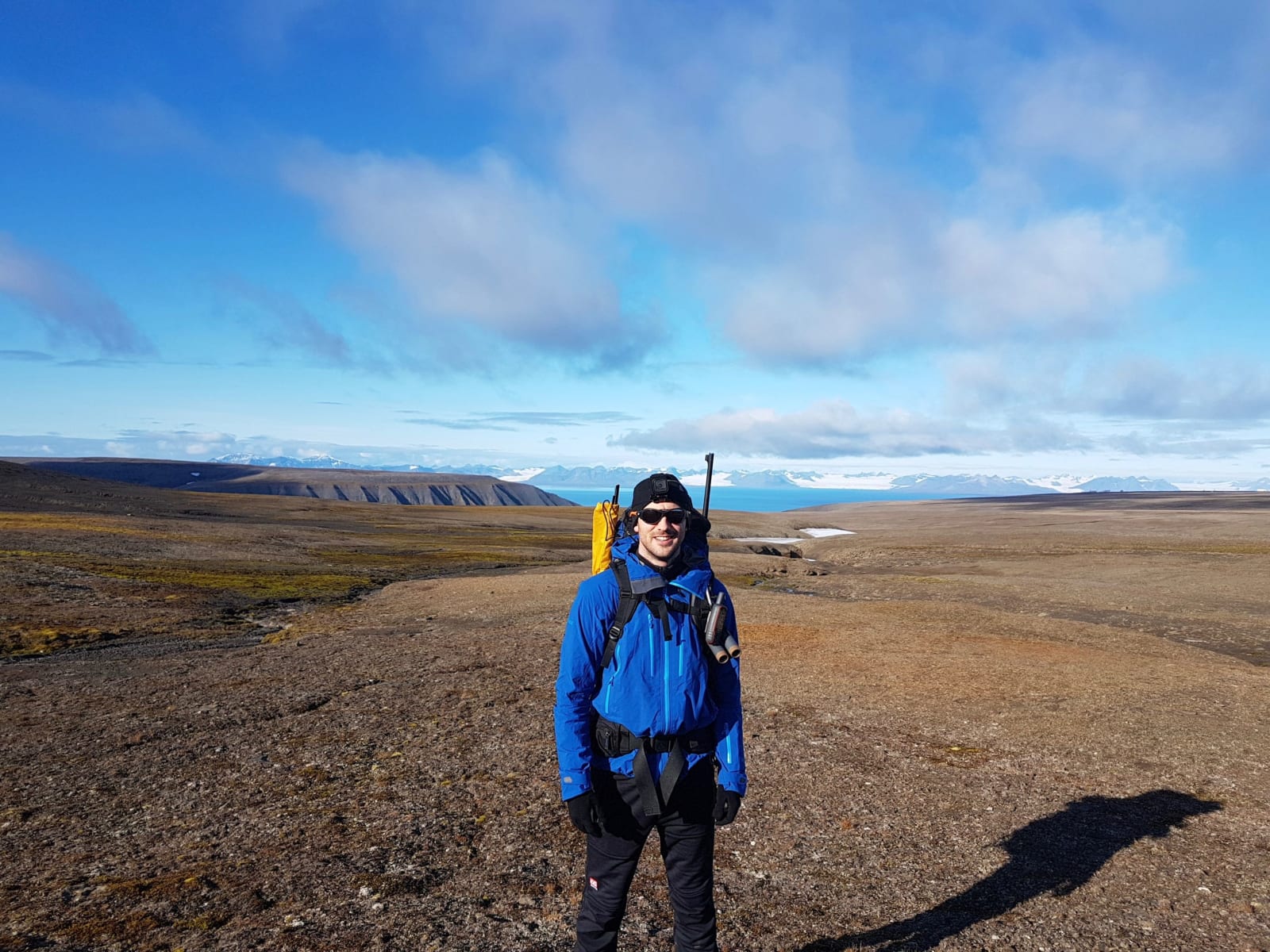
Open terrain above the fjord along the planned expedition route.
Svalbard Loaded Movement
The expedition team moving over rocky tundra with full packs.
Svalbard Midnight Camp
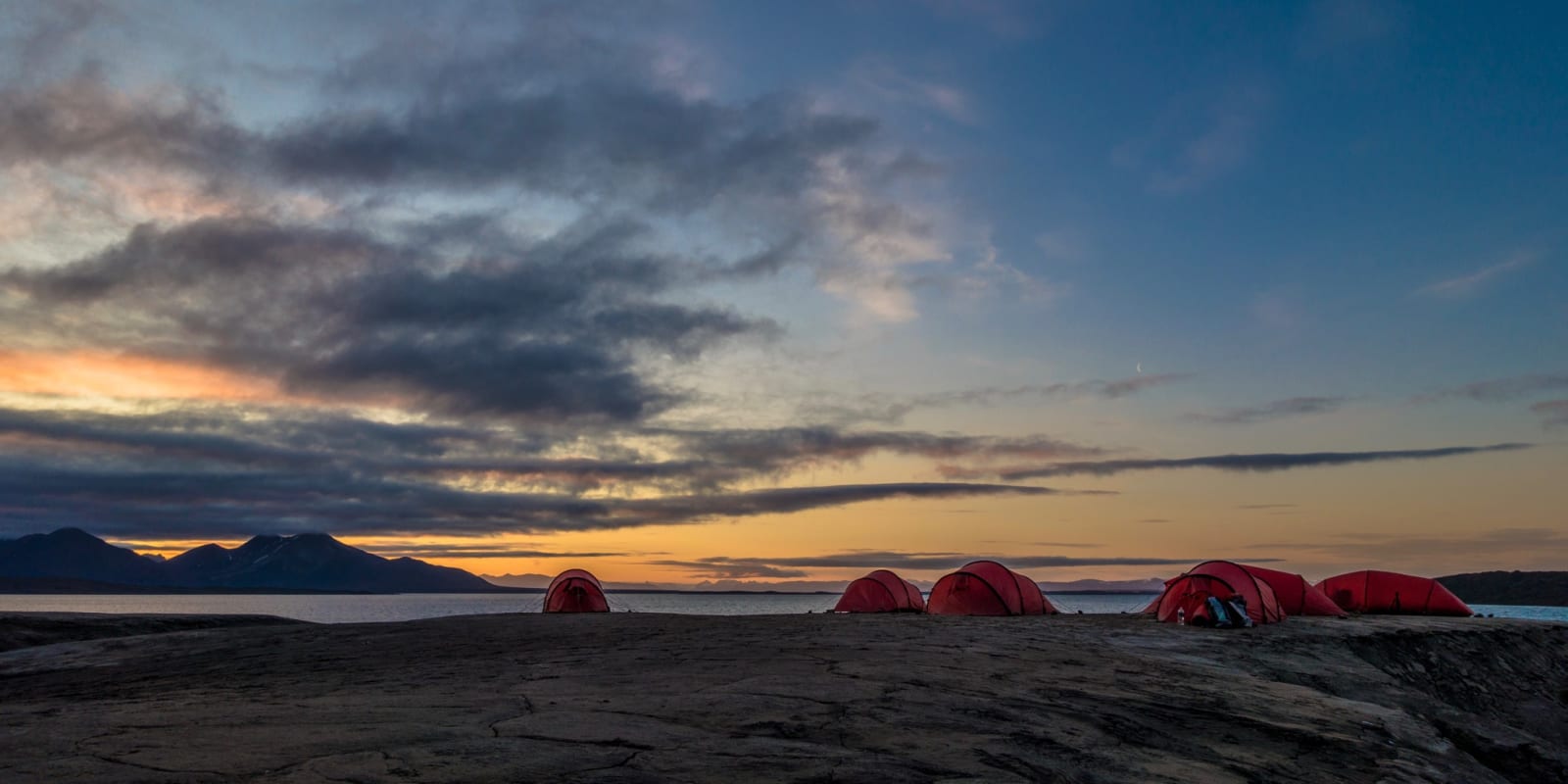
The expedition camp established beside the water under the midnight sun.
Selected Work 08
Booking Platform Product R&D
Earlier two-year product-platform work on a tour and booking system, covering Next.js application development, Redux cart state, checkout flow, Prisma/PostgreSQL models, API routes, Prismic content rendering, authentication, and payment-integration experiments.
A serious booking platform pulls many concerns into one system: product pages, schedules, participant counts, carts, contact details, checkout stages, payment redirection, content management, authentication, admin tools, and data persistence. The work required frontend state, content, database shape, APIs, payments, authentication, and infrastructure to be treated as one operating path.
Role
Designed and implemented substantial parts of an independent booking-platform R&D effort over roughly two years. The work covered architecture, delivery boundaries, application state, content, checkout, APIs, authentication, payments, and infrastructure ownership.
Approach
The implementation used a Next.js and React application with Chakra UI, Redux Toolkit, Next API routes, Prisma over PostgreSQL, Prismic-driven page rendering, JWT/Cognito-style authentication utilities, cart and registration APIs, checkout-stage pages, and Rapyd payment-integration experiments. The platform included booking-panel UI, date and participant selection, cart state, registrant/contact data, schedule and engagement models, management pages, publishing tools, user-management surfaces, and a custom article-builder direction.
Outcome
The project produced a substantial R&D codebase and practical implementation experience across product architecture, frontend state, CMS content, data modeling, server-side API boundaries, checkout, payments, authentication, and maintainability. It directly informed the Whirlwind approach to frontend, backend, content, authentication, deployment, and infrastructure decisions.
Next Step
Discuss the technical work your project requires.
Send the intended outcome, current stage, people already involved, and the software, infrastructure, field, or operational work in scope.